
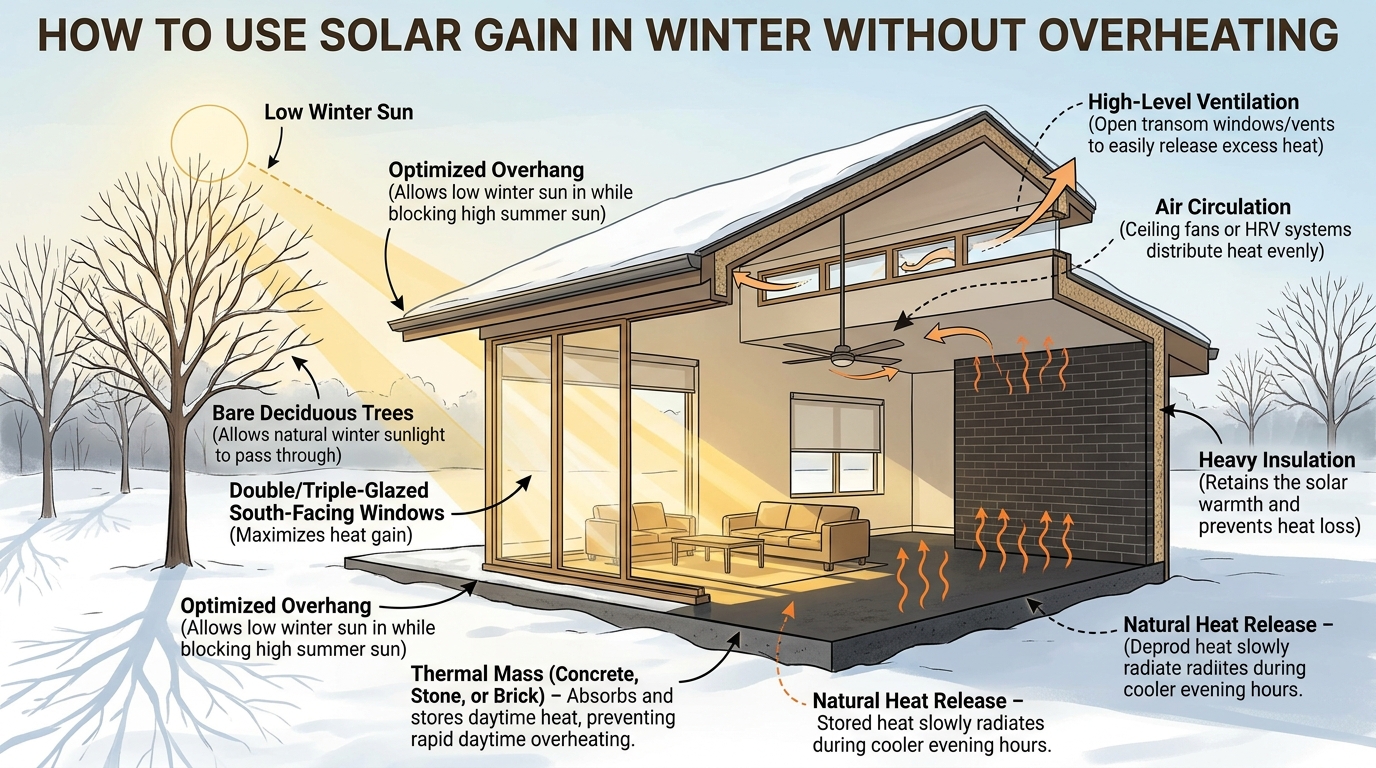
Are you tired of shivering through the winter months while simultaneously dreading your heating bill? Well, what if I told you there was a way to harness the power of the sun to keep your home cozy and warm without breaking the bank? In this blog post, we’ll explore the concept of solar gain and how you can leverage it to your advantage during the colder seasons. By understanding how to effectively use solar gain in winter without overheating, you can strike the perfect balance between comfort and cost-efficiency in your home. So, grab a cup of tea, sit back, and let’s dive into the world of sustainable winter warmth!
Understanding Solar Gain
Solar gain refers to the increase in temperature inside a building due to sunlight entering through windows, walls, or the roof. This natural process can be harnessed to reduce heating costs in winter and potentially provide free heating. Understanding solar gain is crucial for architects, engineers, and homeowners looking to optimize energy efficiency in buildings.
There are two main types of solar gain: direct gain, where sunlight enters a space and warms it directly, and indirect gain, where sunlight is absorbed by a thermal mass (such as a concrete floor) and then releases heat slowly into the space. By strategically designing buildings to maximize or minimize solar gain depending on the season and climate, energy usage can be significantly reduced, leading to cost savings and environmental benefits.
Designing for Solar Gain
Optimizing building orientation: Designing a building with the ideal orientation can significantly impact solar gain. By aligning the building’s longest side to face south (in the northern hemisphere) or north (in the southern hemisphere), you can maximize the amount of sunlight entering the space. This strategic placement helps in harnessing solar energy efficiently.
Utilizing passive solar design: Incorporating passive solar design principles involves using building materials, layout, and landscaping to capture and retain solar heat. Features like large south-facing windows, thermal mass materials, and overhangs can aid in regulating temperature and reducing the need for additional heating systems. This approach not only enhances energy efficiency but also promotes a sustainable and eco-friendly building design.
Controlling Solar Gain
Controlling Solar Gain is crucial to maintaining a comfortable indoor environment and optimizing energy efficiency. One effective method is the use of shading devices such as blinds, curtains, or awnings to block or diffuse direct sunlight. These devices can be strategically positioned to allow natural light in while minimizing heat gain during peak sunlight hours.
Another approach to controlling solar gain is through the use of low-emissivity (low-e) windows. These windows are coated with a thin layer of material that helps reflect heat back to the outside during hot weather while still allowing sunlight to enter. Additionally, thermal mass within a building can help regulate temperature fluctuations by absorbing excess heat during the day and releasing it at night, reducing the need for mechanical heating and cooling systems.

Utilizing Solar Gain in Winter
Solar gain in winter can be a valuable resource for heating buildings efficiently and sustainably. By strategically designing a space to maximize solar gain during the winter months, occupants can benefit from natural warmth and reduced energy costs. One effective way to utilize solar gain in winter is by incorporating large south-facing windows that allow sunlight to enter the building and heat up the interior. Thermal mass materials such as concrete floors or walls can absorb and store this heat, releasing it slowly throughout the day and night to maintain a comfortable temperature.
Additionally, utilizing passive solar design techniques like solar shading devices can help control the amount of sunlight entering the building, optimizing heat gain while preventing overheating. By carefully balancing the amount of glazing and insulation, as well as incorporating thermal curtains or blinds to retain heat at night, buildings can make the most of solar energy in winter without sacrificing comfort or energy efficiency. Overall, harnessing solar gain effectively in winter not only reduces reliance on traditional heating systems but also promotes a more environmentally friendly and sustainable approach to building design and operation.
Preventing Overheating
Preventing overheating in a building is essential to maintain a comfortable indoor environment, especially during hot summer months. There are various strategies that can be implemented to achieve this goal. One effective method is to use shading devices such as awnings, blinds, or vegetation to block direct sunlight from entering the building. This helps reduce solar heat gain and keeps the interior cooler.
Another approach is to improve natural ventilation by strategically placing windows, vents, or operable skylights to promote airflow and dissipate heat. Additionally, incorporating high thermal mass materials in the building’s construction can help absorb excess heat during the day and release it slowly at night, balancing indoor temperatures. By combining these strategies, overheating can be minimized, creating a more sustainable and comfortable living or working environment.
Solar gain is a crucial factor to consider in building design and energy efficiency. By understanding how solar gain works and designing spaces to harness or control it effectively, buildings can achieve significant energy savings and improved comfort levels for occupants. Properly utilizing solar gain in winter can help reduce heating costs, while implementing strategies to prevent overheating in summer can lower the need for excessive cooling.
In conclusion, balancing solar gain in buildings involves a combination of passive design techniques, shading solutions, and efficient building materials. By carefully considering solar gain throughout the design and construction process, architects and engineers can create sustainable, energy-efficient buildings that optimize natural light and thermal comfort for occupants.