
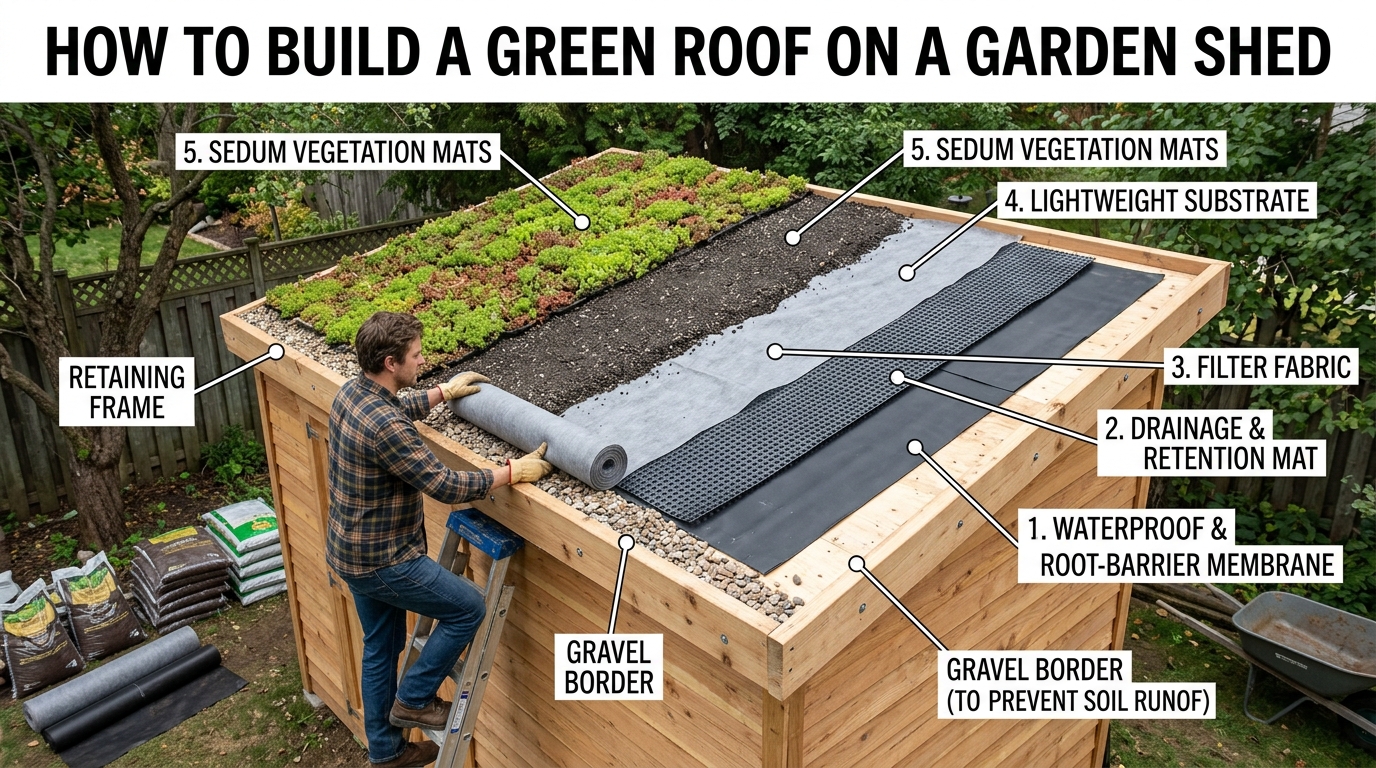
Imagine transforming your ordinary garden shed into a lush oasis teeming with life and color. Building a green roof on your shed is not only a creative project but also a sustainable way to enhance your outdoor space. By incorporating a green roof, you can reduce stormwater runoff, improve air quality, and provide a habitat for birds and insects. Plus, the added insulation can help regulate the temperature inside your shed, making it more energy-efficient. Whether you’re a seasoned gardener or a DIY enthusiast, creating a green roof on your garden shed is a rewarding endeavor that can bring beauty and environmental benefits to your backyard.
Benefits of Green Roofs
Environmental Benefits: Green roofs provide numerous environmental advantages. They help reduce urban heat island effect by absorbing and deflecting heat, improving energy efficiency in buildings. Additionally, they can help mitigate stormwater runoff by absorbing rainwater and reducing the strain on drainage systems. Green roofs also promote biodiversity in urban areas by providing habitats for birds, insects, and other wildlife.
Economic Benefits: Implementing green roofs can lead to cost savings in the long run. They can extend the lifespan of a roof by protecting it from UV radiation and temperature fluctuations, reducing maintenance and replacement costs. Green roofs can also improve a building’s energy efficiency, resulting in lower heating and cooling expenses. Furthermore, they can increase property value and appeal, making buildings more attractive to tenants or buyers.
Planning and Design
Planning and design are crucial steps in the successful implementation of a green roof project. Before starting the actual construction, it is essential to conduct a thorough analysis of the site, considering factors such as structural integrity, weight-bearing capacity, drainage systems, and sunlight exposure. This preliminary assessment will help determine the feasibility of installing a green roof and guide the design process.
When designing a green roof, it is important to consider the specific goals and objectives of the project. Whether the aim is to improve energy efficiency, enhance biodiversity, or create a recreational space, the design should be tailored to meet these objectives. Factors such as plant selection, irrigation systems, and maintenance requirements should also be taken into account during the planning phase to ensure the long-term success of the green roof.
Materials and Tools Needed
When planning to install a green roof, there are several essential materials and tools you will need to ensure a successful project. First and foremost, you will require a waterproof membrane to protect the roof structure from water damage. This membrane is crucial in preventing leaks and maintaining the integrity of the building. Additionally, you will need a drainage layer to manage excess water and prevent waterlogging, which can be detrimental to the plants and the roof structure.
Other necessary materials include a high-quality growing medium, such as lightweight soil or a specialized green roof mix, to support plant growth. You will also need appropriate vegetation, such as sedum or grasses, that are well-suited for the specific climate and conditions of your location. In terms of tools, you will likely need a shovel, rake, and wheelbarrow for transporting and spreading the growing medium. Depending on the complexity of the project, you may also require a membrane cutter, utility knife, and other specialized tools for precise installation.
Step-by-Step Installation Guide
Preparation: Before starting the installation of a green roof, ensure that the roof structure can support the additional weight of the vegetation, soil, and other materials. It is essential to have a waterproof membrane in place to protect the building from water damage. Additionally, gather all the necessary materials and tools required for the installation process.
Installation Steps:
- Install Drainage Layer: Begin by laying down a drainage layer on the roof surface to prevent waterlogging and ensure proper drainage.
- Add Filter Fabric: Place a filter fabric over the drainage layer to prevent soil from clogging the drainage system while allowing water to pass through.
- Layer Soil: Add a suitable lightweight growing medium or soil mix over the filter fabric. Ensure that the soil layer is deep enough to support plant growth.
- Plant Selection: Choose appropriate plants for the green roof based on factors such as climate, sunlight exposure, and maintenance requirements.
- Planting: Carefully plant the selected vegetation in the soil layer, ensuring proper spacing and arrangement for optimal growth.
- Irrigation System: Install an irrigation system to ensure that the green roof receives adequate water, especially during dry periods.
- Mulching: Finish by adding a layer of mulch to help retain moisture, suppress weed growth, and protect the plants.
Maintenance Tips
Maintaining a green roof is essential to ensure its longevity and effectiveness in providing environmental benefits. Regular maintenance tasks include checking for weeds and removing them promptly to prevent them from taking over the roof. It is also crucial to inspect the drainage system regularly to ensure proper water flow and prevent waterlogging, which can damage the plants and the roof structure.
Pruning and trimming plants as needed will help promote healthy growth and prevent overcrowding. Additionally, monitoring the health of the plants and addressing any issues promptly, such as pests or diseases, will help maintain a thriving green roof ecosystem. Lastly, scheduling periodic professional inspections and maintenance checks can help identify any potential issues early on and prevent costly repairs in the future.
Green roofs are a sustainable and environmentally friendly roofing solution that offers a wide range of benefits for both buildings and the surrounding ecosystem. By incorporating vegetation on rooftops, green roofs help reduce energy consumption, improve air quality, manage stormwater runoff, and create green spaces in urban environments. These roofs not only provide insulation and reduce the urban heat island effect but also extend the lifespan of the roof membrane.
In conclusion, the implementation of green roofs presents a practical way to address various environmental challenges while enhancing the overall quality of life for building occupants and the community at large. As more cities and individuals embrace sustainable practices, green roofs are becoming increasingly popular as a viable option for new construction projects and roof renovations. With proper planning, design, installation, and maintenance, green roofs can play a significant role in promoting biodiversity, mitigating climate change, and fostering a more sustainable future for generations to come.