
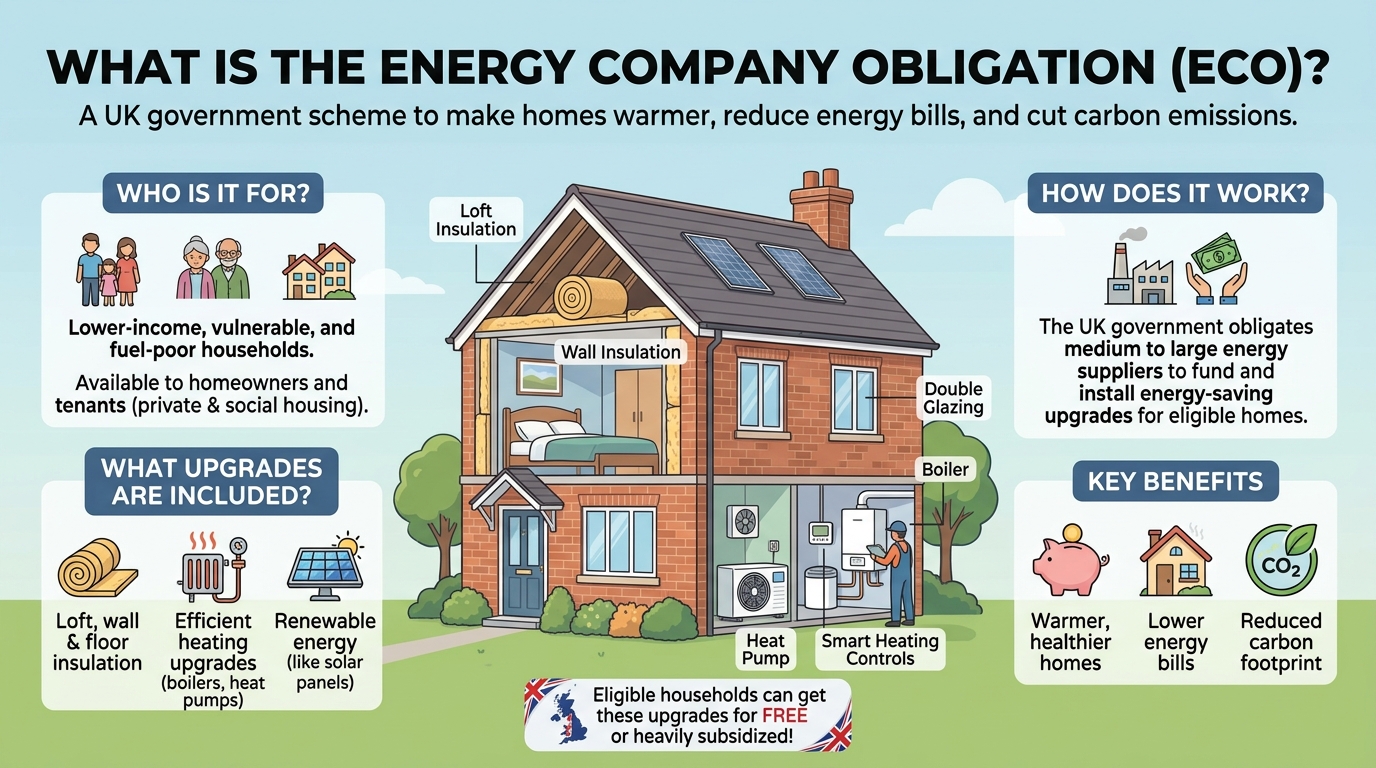
Are you curious about how energy companies are contributing to a more sustainable future? Let’s delve into the Energy Company Obligation (ECO), a crucial initiative aimed at promoting energy efficiency and reducing carbon emissions. The ECO requires energy suppliers to fund energy-saving improvements in homes and buildings, particularly for low-income households and those living in fuel poverty. By incentivizing companies to take action, the ECO plays a vital role in tackling climate change and improving the energy efficiency of properties across the UK. Let’s explore the ins and outs of this important scheme and its impact on both individuals and the environment.
Understanding the Energy Company Obligation
The Energy Company Obligation (ECO) is a government energy efficiency scheme in the United Kingdom aimed at reducing carbon emissions and tackling fuel poverty. It requires larger energy suppliers to help improve the energy efficiency of households by providing funding for energy-saving measures. ECO has three main obligations, known as the Carbon Emissions Reduction Obligation (CERO), the Carbon Saving Community Obligation (CSCO), and the Home Heating Cost Reduction Obligation (HHCRO).
Under CERO, suppliers must promote measures that result in carbon savings, such as insulation and heating system upgrades. CSCO focuses on low-income and vulnerable households in specific areas, providing support for insulation and heating improvements. HHCRO targets households at risk of fuel poverty, offering heating system repairs or replacements. Understanding the different obligations of ECO is crucial for both suppliers and consumers to take advantage of the scheme’s benefits and contribute to a greener, more energy-efficient future.
Section 3: Eligibility Criteria
Eligibility for the Energy Company Obligation (ECO) scheme is determined by various criteria set by the government to ensure that the benefits are provided to those who need them the most. Typically, eligibility is based on factors such as income level, type of property, energy efficiency measures needed, and whether the applicant receives certain benefits.
Households must meet specific requirements to qualify for ECO assistance. These requirements may include being in receipt of certain benefits like Income Support, Universal Credit, or Pension Credit, living in a property that requires energy efficiency improvements, or having a low income. Additionally, the type of property, its age, and the existing energy efficiency measures in place are also taken into consideration when determining eligibility for the ECO scheme.
Benefits of ECO
The Energy Company Obligation (ECO) provides several benefits for households in need of energy efficiency improvements. One significant advantage is the reduction of energy bills through measures such as insulation, boiler upgrades, and heating system improvements. By making these enhancements, households can experience lower energy consumption, leading to cost savings in the long term.
Another key benefit of ECO is the improvement of overall living conditions. Enhancing the energy efficiency of a home can lead to better comfort levels, reduced drafts, and increased warmth during the colder months. This can contribute to a healthier and more comfortable living environment for residents. Additionally, by reducing energy consumption, ECO helps lower carbon emissions, contributing to environmental sustainability and the fight against climate change.

How to Apply
Applying for the Energy Company Obligation (ECO) scheme is a straightforward process that involves a few key steps. Firstly, individuals or households interested in benefiting from ECO should check their eligibility against the criteria set by the scheme. This usually involves factors such as income level, property type, and existing energy efficiency measures.
Once eligibility is confirmed, applicants can reach out to approved ECO suppliers or providers in their area. These suppliers will assess the property to identify potential energy-saving improvements that could be made. After agreeing on the scope of work and costs, the supplier will carry out the necessary installations or upgrades. Finally, the supplier will handle the paperwork and claim the ECO subsidy on behalf of the applicant, making the whole process hassle-free for the homeowner.
Case Studies
Case studies provide real-world examples of how the Energy Company Obligation (ECO) has positively impacted individuals and households. These studies showcase successful ECO projects, detailing the energy efficiency improvements made, cost savings achieved, and overall benefits experienced by participants. By examining these cases, stakeholders can better understand the practical applications and outcomes of ECO initiatives.
Furthermore, case studies serve as valuable learning tools for other homeowners, landlords, and energy providers considering participating in the ECO scheme. They offer insights into the process, challenges faced, and solutions implemented during ECO projects, helping to inspire and inform future energy efficiency endeavors. Overall, these real-life examples demonstrate the effectiveness of the ECO program in reducing energy consumption, lowering utility bills, and improving living conditions for individuals and families across the country.
The Energy Company Obligation (ECO) plays a crucial role in promoting energy efficiency and reducing carbon emissions in households across the UK. By providing funding for energy-saving measures such as insulation and heating upgrades, ECO helps lower energy bills, improve living conditions, and tackle fuel poverty.
As a homeowner or tenant, taking advantage of ECO can lead to long-term savings on energy costs and contribute to a greener environment. It is essential to understand the eligibility criteria and the application process to benefit from the scheme fully. Overall, ECO serves as a valuable initiative in driving sustainability efforts and enhancing energy efficiency in homes.