
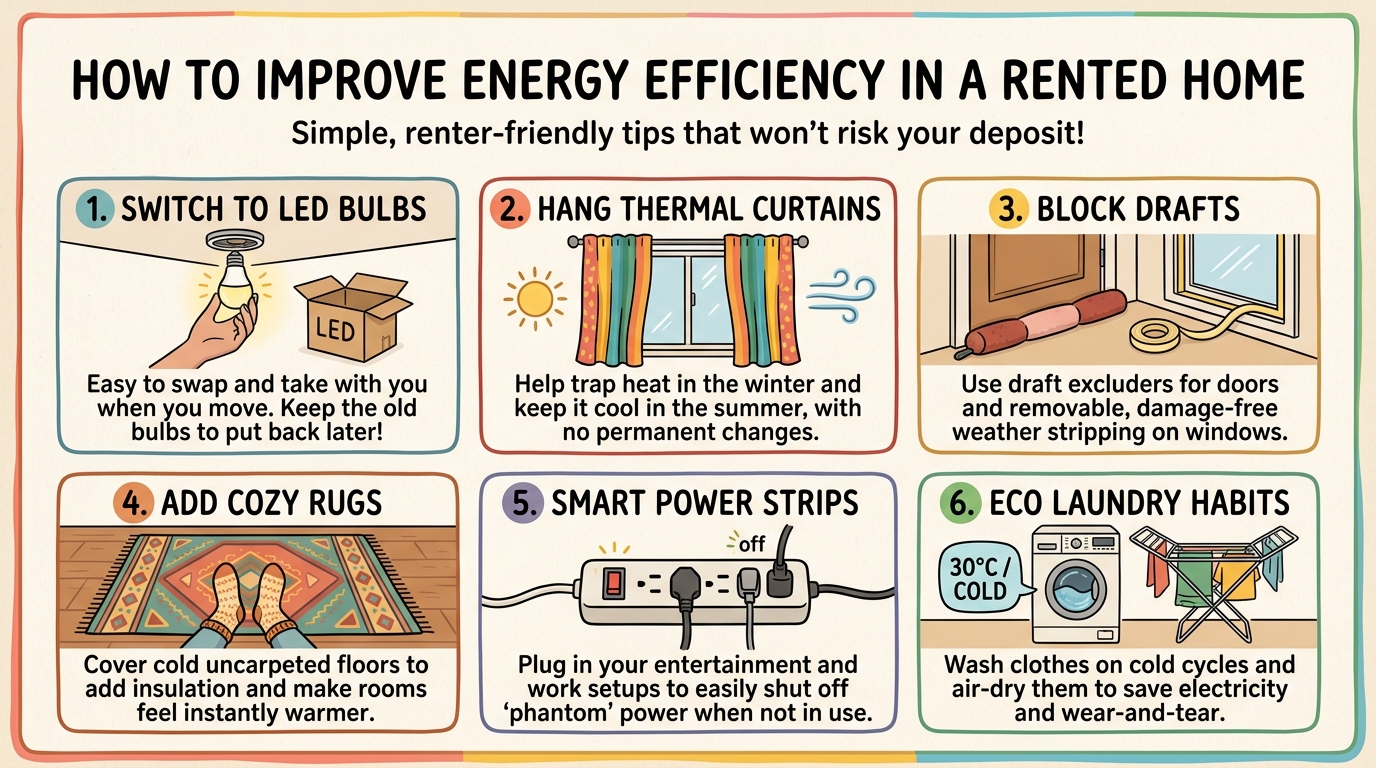
Want to slash your energy bills and reduce your carbon footprint, even if you’re renting? We’ve got you covered! Improving energy efficiency in a rented home may seem challenging, but with a few simple tips and tricks, you can make a big difference. From easy fixes like weather-stripping windows and doors to more significant changes like upgrading appliances and lighting, there are plenty of ways to boost energy efficiency in your rented space. So, whether you want to save money, lower your environmental impact, or simply make your home more comfortable, follow our guide to start making a positive change today.
Assess Current Energy Usage
Assessing your current energy usage is a crucial first step in improving energy efficiency in your home. Start by gathering utility bills and analyzing them to understand your historical energy consumption patterns. Consider using energy monitoring devices to track real-time usage and identify peak consumption times. Additionally, conduct a home energy audit to pinpoint areas of inefficiency such as drafty windows, outdated appliances, or inadequate insulation.
By understanding how and when you use energy in your home, you can make informed decisions on where to focus your efforts to reduce consumption. This assessment will provide valuable insights into potential energy-saving opportunities and help you prioritize upgrades and modifications that will have the most significant impact on your energy bills.
Upgrade to Energy-Efficient Appliances
Upgrade to energy-efficient appliances is a crucial step in reducing energy consumption and saving money on utility bills. Energy-efficient appliances are designed to operate using less energy without compromising performance. Look for appliances with the Energy Star label, as they are certified to meet strict energy efficiency guidelines set by the Environmental Protection Agency (EPA). When shopping for new appliances, consider the energy efficiency rating and choose models that consume less electricity or gas compared to older, less efficient ones.
Common energy-efficient appliances include refrigerators, washing machines, dishwashers, water heaters, and HVAC systems. These appliances are designed with advanced technologies such as improved insulation, variable speed motors, and smart features that optimize energy usage. While energy-efficient appliances may have a higher upfront cost, the long-term savings in energy bills make them a worthwhile investment for any household looking to reduce their carbon footprint and expenses related to energy consumption.
Seal Air Leaks and Insulate
Sealing air leaks and properly insulating your home are crucial steps in improving energy efficiency. Air leaks, such as gaps around windows, doors, and vents, can lead to significant energy loss as conditioned air escapes and outside air infiltrates. By sealing these leaks with caulk or weatherstripping, you can prevent energy waste and reduce your heating and cooling costs. Additionally, adding insulation to your walls, attic, and floors can help maintain a consistent indoor temperature, reducing the workload on your HVAC system.
Proper insulation acts as a barrier against heat transfer, keeping your home cooler in the summer and warmer in the winter. It not only helps in maintaining a comfortable environment but also contributes to lower energy bills and a reduced carbon footprint. Conducting an energy audit to identify areas in need of insulation and sealing can guide you in making targeted improvements to enhance the energy efficiency of your home.

Optimize Heating and Cooling Systems
Optimizing your heating and cooling systems can significantly reduce energy consumption and lower utility bills. Start by ensuring your HVAC system is well-maintained, with regular filter changes and professional tune-ups. Proper insulation and sealing of ducts can prevent energy loss, improving the efficiency of the system.
Consider upgrading to a programmable thermostat to better control the temperature settings based on your schedule, reducing energy waste when you are away from home. Additionally, installing ceiling fans can help circulate air more efficiently, reducing the workload on your HVAC system. By optimizing your heating and cooling systems, you can create a more comfortable indoor environment while saving on energy costs in the long run.
Utilize Smart Home Technology
Smart home technology offers innovative solutions to help homeowners manage and optimize their energy usage efficiently. By integrating smart devices such as smart thermostats, smart lighting systems, and smart plugs, individuals can control their home energy consumption remotely and automatically. Smart thermostats, for example, can learn household patterns and adjust temperature settings for maximum energy efficiency, ultimately reducing heating and cooling costs. Additionally, smart lighting systems allow users to schedule and dim lights according to their needs, saving electricity when lights are not in use.
Moreover, the integration of smart plugs enables users to monitor and control the power consumption of various devices remotely, ensuring that energy is not wasted when appliances are not in use. By utilizing smart home technology, homeowners can not only reduce their energy bills but also contribute to a more sustainable and eco-friendly lifestyle. The convenience and energy-saving benefits of smart home technology make it a valuable investment for those looking to improve their home’s energy efficiency.
Monitor and Track Energy Usage
Monitoring and tracking energy usage is a crucial step in managing and optimizing your household’s energy consumption. By utilizing energy monitoring tools and platforms, you can gain valuable insights into when and where energy is being used most efficiently and where there may be opportunities for improvement.
Tracking energy usage allows you to identify patterns, trends, and potential areas of waste, enabling you to make informed decisions on how to adjust your habits or upgrade your systems for greater efficiency. By monitoring your energy consumption regularly, you can set goals, track progress, and ultimately work towards reducing your overall energy usage and costs.