
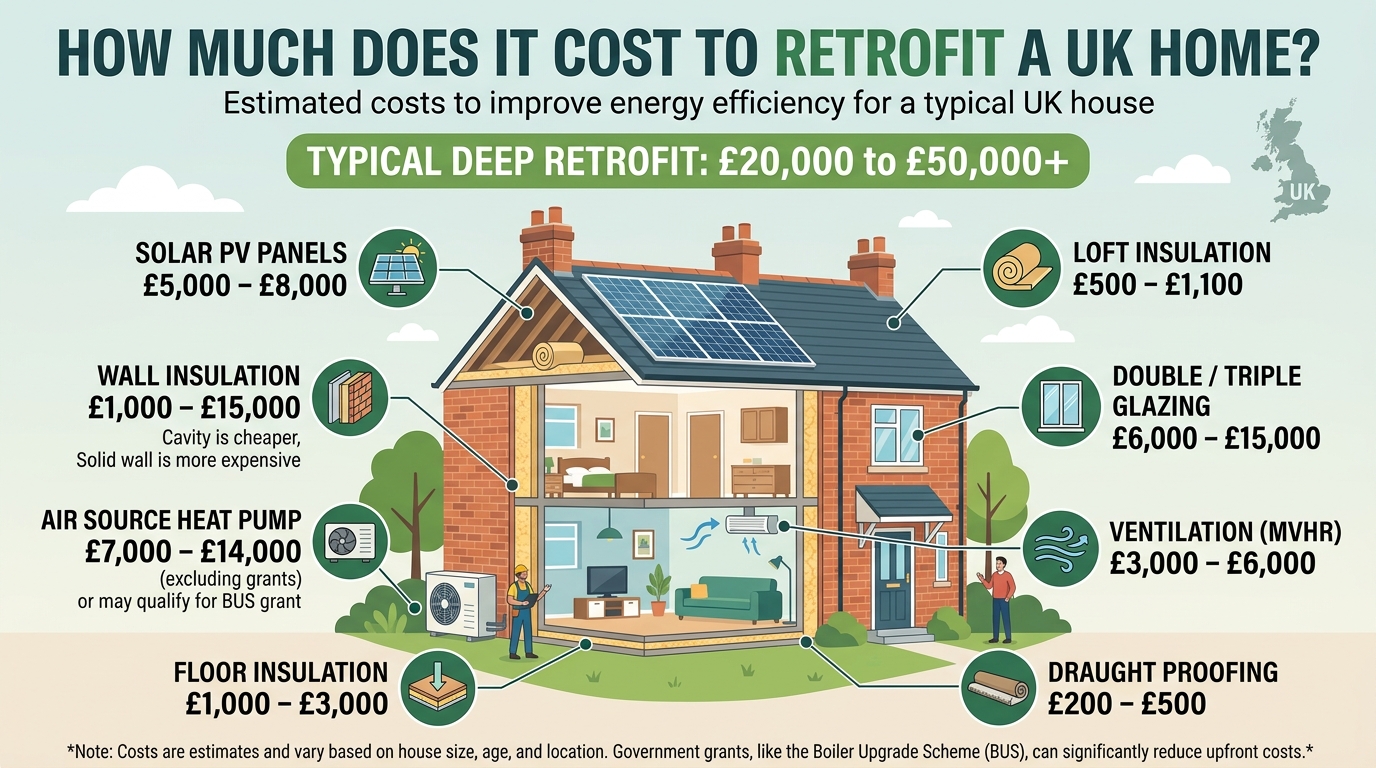
Curious about how much it costs to retrofit a UK home? Look no further for a breakdown of the expenses involved in making your home more energy-efficient and sustainable. Retrofitting your home is not only an investment in the environment but also in your wallet in the long run. From insulation to heating systems, each aspect comes with its own price tag. Let’s delve into the world of home retrofitting in the UK and discover the costs associated with creating a greener and more efficient living space.
Benefits of Retrofitting
Retrofitting existing buildings can bring numerous benefits, both in terms of financial savings and environmental impact. One significant advantage is the potential for improved energy efficiency. By upgrading systems such as lighting, HVAC, and insulation, buildings can reduce energy consumption, leading to lower utility bills and a smaller carbon footprint. Additionally, retrofitting can enhance occupant comfort by creating a more pleasant indoor environment with better lighting, temperature control, and air quality.
Another key benefit of retrofitting is the opportunity to increase the property value of a building. Upgraded buildings with modern amenities and energy-efficient features are more attractive to tenants and buyers, potentially commanding higher rental rates or sale prices. Moreover, retrofitting can prolong the lifespan of a building by addressing structural issues, improving safety, and reducing maintenance requirements, ultimately leading to long-term cost savings and a more sustainable built environment.
Retrofitting Options
Retrofitting options refer to the various strategies and approaches available to upgrade or modify existing structures to enhance their performance, sustainability, and resilience. One common retrofitting option is strengthening the structural elements of a building to improve its ability to withstand seismic forces, wind loads, or other environmental hazards. This can involve adding steel braces, concrete walls, or other reinforcement materials to the existing structure.
Another retrofitting option is improving the energy efficiency of a building by upgrading insulation, windows, HVAC systems, and lighting. This can help reduce energy consumption, lower utility costs, and minimize the environmental impact of the building. Additionally, retrofitting options may include installing renewable energy systems such as solar panels or wind turbines to generate clean, sustainable power on-site. Each retrofitting option should be carefully evaluated based on the specific needs and goals of the building owner to achieve the desired outcomes effectively.
Cost Factors
Cost factors play a crucial role in determining the feasibility and success of retrofitting projects. The total cost of a retrofitting project can vary significantly depending on various factors such as the size of the building, the type of retrofit measures implemented, the complexity of the project, and the location of the building. It is essential to conduct a thorough cost analysis before embarking on a retrofitting project to ensure that the benefits outweigh the expenses.
Some key cost factors to consider include material costs, labor costs, design and engineering fees, permits and approvals, project management expenses, and any potential unforeseen costs. Additionally, the long-term savings and benefits of retrofitting, such as energy efficiency improvements, reduced maintenance costs, and increased property value, should also be taken into account when evaluating the overall cost-effectiveness of a retrofitting project. By carefully assessing and managing cost factors, stakeholders can make informed decisions and maximize the return on investment of retrofitting initiatives.

Case Studies
Case studies offer real-world examples of successful retrofitting projects, providing valuable insights into the process and outcomes. By examining these cases, stakeholders can learn from the experiences of others, understand best practices, and identify potential challenges to mitigate.
These studies showcase the effectiveness of retrofitting in different contexts, such as residential, commercial, or industrial buildings. They highlight the improvements in energy efficiency, cost savings, environmental impact, and overall building performance achieved through retrofitting measures. Case studies also demonstrate the diverse approaches taken by project teams, including technology choices, funding sources, and project management strategies, offering a wealth of knowledge for those considering similar projects.
Government Support
Government support for retrofitting projects plays a crucial role in promoting energy efficiency and sustainability. Many governments around the world offer various incentives, subsidies, and tax credits to encourage building owners to invest in retrofitting measures. These incentives can help offset the initial costs of retrofitting and make it a more financially viable option for many organizations.
In addition to financial incentives, governments also provide technical assistance, resources, and guidelines to support retrofitting projects. By creating supportive policies and programs, governments can drive the adoption of energy-saving technologies and practices, ultimately leading to reduced carbon emissions and energy consumption. Overall, government support is essential in accelerating the transition to more sustainable and environmentally friendly buildings through retrofitting initiatives.
Retrofitting existing buildings is a crucial step towards achieving energy efficiency, cost savings, and sustainability goals. By upgrading older structures with modern technologies and materials, building owners can significantly reduce energy consumption, improve indoor comfort, and extend the lifespan of their properties.
In conclusion, retrofitting not only benefits the environment by reducing carbon emissions but also offers a range of economic advantages. From lower utility bills to increased property value, the decision to retrofit is a win-win for both building owners and the planet. As the demand for energy-efficient buildings continues to grow, retrofitting will play an essential role in creating a more sustainable built environment for future generations.