
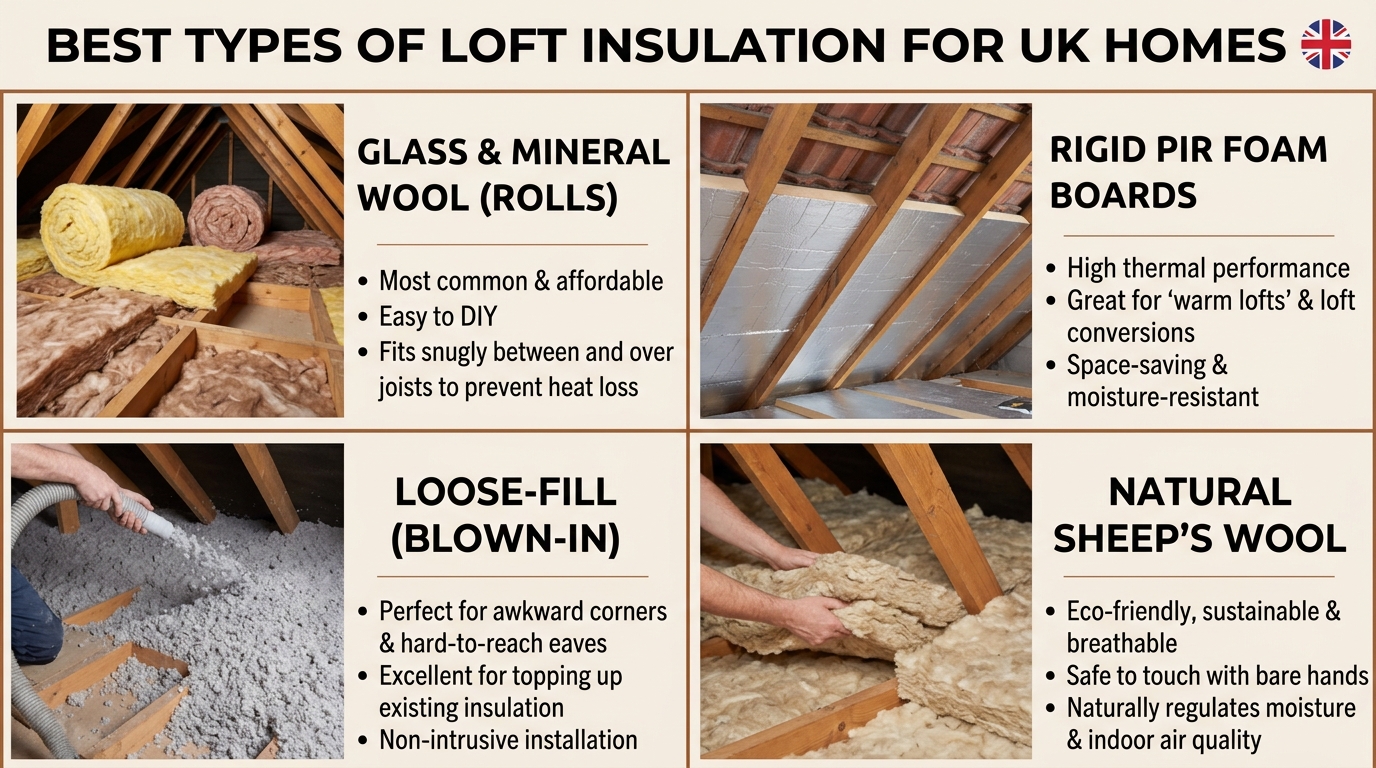
Looking to keep your UK home cozy and energy-efficient? The type of loft insulation you choose can make a big difference! With the chilly British weather, having the right insulation is key to staying warm and saving on energy bills. Let’s explore some of the best types of loft insulation for UK homes so you can make the right choice for your space. From traditional options like mineral wool to newer alternatives like spray foam, there’s a wide range of products to suit different needs and budgets. So, let’s dive in and find out which type of loft insulation could be the perfect fit for your home in the UK!
Cellulose Insulation
Cellulose insulation is an eco-friendly option made from recycled paper materials, primarily newsprint. It is treated with fire-retardant chemicals to improve its resistance to flames. Cellulose insulation is known for its excellent thermal performance, providing a high level of energy efficiency by effectively reducing heat transfer. This type of insulation is commonly used in attics, walls, and floors to help maintain a consistent indoor temperature and reduce energy costs.
One of the key benefits of cellulose insulation is its ability to fill small gaps and voids in the building structure, creating a more airtight and energy-efficient environment. Additionally, cellulose insulation is relatively easy to install and can be blown or sprayed into cavities using specialized equipment. Its affordability, eco-friendliness, and thermal performance make cellulose insulation a popular choice for both residential and commercial buildings seeking sustainable and effective insulation solutions.
Spray Foam Insulation
Spray foam insulation is a popular choice for homeowners looking to improve energy efficiency in their homes. It is made by mixing two types of composite materials, isocyanate and polyol resin, which are sprayed through a gun to create a foam that expands and hardens. This expanding foam fills gaps and crevices, creating a tight seal that helps prevent air leakage and heat loss.
One of the key benefits of spray foam insulation is its high R-value, which measures the material’s thermal resistance. This means that it is very effective at reducing heat transfer, keeping homes cooler in the summer and warmer in the winter. Additionally, spray foam insulation can help minimize moisture infiltration, making it a good choice for areas prone to humidity or moisture issues.
Mineral Wool Insulation
Mineral wool insulation is a type of insulation made from natural rock materials or recycled slag from the steel industry. It is known for its excellent fire resistance and sound absorption properties, making it a popular choice for both residential and commercial buildings. Mineral wool insulation comes in two main forms: batts and loose-fill. Batts are pre-cut panels that are easy to install between wall studs, while loose-fill insulation is blown into attics or other hard-to-reach spaces.
One of the key advantages of mineral wool insulation is its high melting point, which makes it a non-combustible material. This property not only provides fire protection but also helps improve the overall safety of a building. Additionally, mineral wool is a sustainable option as it is made from abundant and recyclable materials. Its thermal performance, moisture resistance, and mold resistance further contribute to its popularity as an effective insulation choice for various construction projects.

Reflective Foil Insulation
Reflective foil insulation is a type of insulation that utilizes reflective materials, such as aluminum foil, to create a barrier that reflects heat away from the living space. This type of insulation is particularly effective in hot climates or areas with high sun exposure, as it helps to reduce heat gain and keep indoor spaces cooler. Reflective foil insulation is often used in attics, walls, and roofs to improve energy efficiency and reduce cooling costs.
One of the key benefits of reflective foil insulation is its ability to block radiant heat transfer, which is the primary source of heat gain in buildings. By reflecting the sun’s rays away from the structure, reflective foil insulation helps maintain a comfortable indoor temperature and reduce the workload on air conditioning systems. Additionally, this type of insulation is easy to install and can be a cost-effective solution for improving the thermal performance of a building.
Natural Insulation Materials
Natural insulation materials are eco-friendly options made from renewable resources such as wool, cotton, hemp, and cork. These materials offer excellent thermal performance, are biodegradable, and have low environmental impact compared to traditional insulation.
Wool insulation is a popular choice due to its natural fire resistance, moisture-wicking properties, and ability to regulate indoor humidity levels. Cotton insulation, made from recycled denim, is another sustainable option that provides effective thermal insulation and soundproofing. Hemp insulation is a durable and mold-resistant material that offers superior thermal performance. Cork insulation is lightweight, hypoallergenic, and a great option for soundproofing and thermal insulation.
Blown-in Insulation
Blown-in insulation is a type of insulation material that is installed using a blowing machine. It consists of loose particles, such as fiberglass, cellulose, or mineral wool, that are blown into attics, walls, or other spaces to create a thermal barrier. This method is particularly useful for existing structures or hard-to-reach areas, as it can easily conform to irregular shapes and fill in gaps and voids.
Blown-in insulation offers several advantages, including its ability to provide excellent coverage and thermal performance. It can effectively reduce energy costs by improving the overall energy efficiency of a building. Additionally, blown-in insulation is a relatively quick and cost-effective insulation solution compared to traditional methods. However, proper installation is crucial to ensure optimal performance and long-term effectiveness of the insulation.