
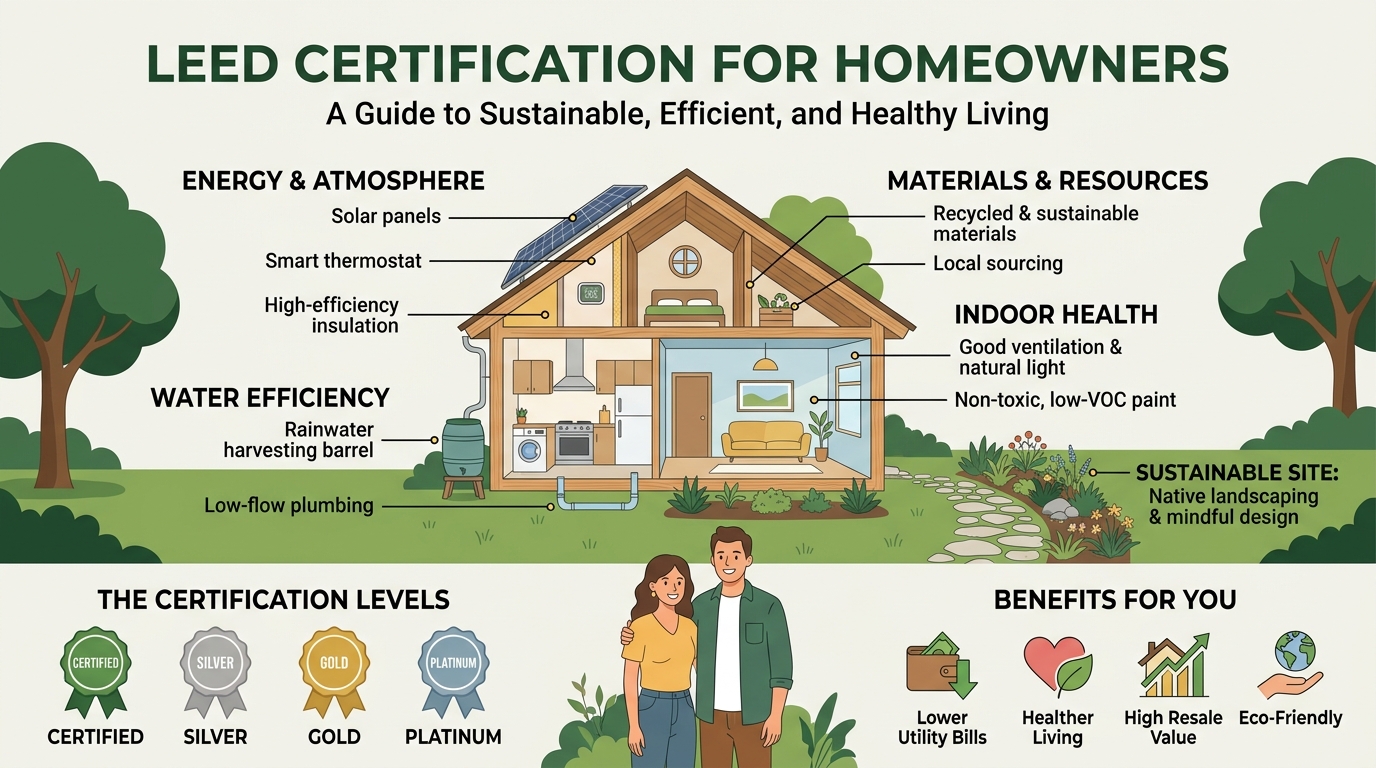
Are you a homeowner looking to make your home more eco-friendly and energy-efficient? Have you heard of LEED certification but aren’t quite sure what it entails? Let’s dive into the world of LEED certification and how it can benefit homeowners who are passionate about sustainability. LEED, which stands for Leadership in Energy and Environmental Design, is a globally recognized green building certification program that promotes sustainable practices in the design, construction, and operation of buildings. By achieving LEED certification for your home, you can reduce your environmental impact, lower your energy bills, and create a healthier living space for you and your family. Let’s explore the ins and outs of LEED certification and discover how you can take your home to the next level of sustainability.
Benefits of LEED Certification for Homeowners
Increased Property Value: One of the primary benefits of obtaining LEED certification for homeowners is the potential increase in property value. LEED-certified homes are perceived as more desirable in the real estate market due to their energy efficiency, sustainable features, and overall lower environmental impact. This can lead to a higher resale value and a competitive edge when selling the property.
Lower Utility Costs: Another significant advantage of LEED certification for homeowners is the potential for lower utility costs over time. LEED-certified homes are designed to be energy-efficient, utilizing features such as improved insulation, high-performance windows, and energy-efficient appliances. These elements result in reduced energy consumption, leading to lower electricity, water, and heating bills for homeowners, ultimately contributing to long-term savings and a more sustainable lifestyle.
Steps to Achieve LEED Certification
Understand the Requirements: The first step in achieving LEED certification for a home is to familiarize yourself with the various rating systems and requirements set by the U.S. Green Building Council (USGBC). Each rating system has specific criteria related to sustainable site development, water efficiency, energy performance, materials selection, and indoor environmental quality.
Select a LEED Accredited Professional: Working with a LEED Accredited Professional is crucial for navigating the certification process. These professionals have the expertise and knowledge to guide homeowners through the documentation, verification, and submission process, ensuring compliance with LEED standards.
Implement Sustainable Design Strategies: To achieve LEED certification, homeowners must incorporate sustainable design strategies into their home construction or renovation project. This may include using energy-efficient appliances, installing renewable energy systems, using environmentally friendly materials, and optimizing water usage through efficient fixtures.
Monitor and Track Progress: Throughout the project, it is essential to monitor and track progress towards meeting the required LEED criteria. Keeping detailed records of materials used, energy consumption, water usage, and indoor air quality measurements will be necessary for the certification process.
Common Misconceptions About LEED
One common misconception about LEED (Leadership in Energy and Environmental Design) certification is that it is only for new construction projects. In reality, LEED certification can be obtained for existing buildings through the LEED for Existing Buildings Operations and Maintenance (LEED EBOM) program. This program helps owners and operators improve the sustainability and efficiency of their buildings, leading to cost savings and a reduced environmental impact.
Another misconception is that pursuing LEED certification is too costly and time-consuming. While there are costs associated with the certification process, the long-term benefits in terms of energy savings, improved indoor air quality, and increased property value often outweigh the initial investment. Additionally, there are resources available to help streamline the certification process and make it more manageable for homeowners and building professionals.

Case Studies of LEED-Certified Homes
Case studies of LEED-certified homes provide real-world examples of successful sustainable building practices. These studies showcase the various strategies and technologies used to achieve LEED certification, highlighting the positive impact on energy efficiency, water conservation, indoor air quality, and overall sustainability. By examining these case studies, homeowners, builders, and designers can gain valuable insights into the practical application of sustainable building principles.
Furthermore, case studies of LEED-certified homes serve as inspiration for future projects, demonstrating that it is possible to create comfortable, attractive, and environmentally friendly living spaces. These real-life examples not only illustrate the benefits of sustainable construction but also show how LEED certification can enhance the quality of life for occupants while reducing the environmental footprint of residential buildings. By studying successful case studies, stakeholders in the construction industry can learn from best practices and innovative solutions implemented in LEED-certified homes.
Choosing the Right Professionals for LEED Projects
Choosing the right professionals for your LEED project is crucial to its success. Look for architects, engineers, contractors, and consultants who are experienced and knowledgeable in sustainable design and construction practices. These professionals should be familiar with LEED standards and requirements to ensure that your project meets the necessary criteria for certification.
When selecting professionals for your LEED project, consider their past experience with similar projects, their commitment to sustainability, and their ability to work collaboratively with a team. Communication skills and a track record of successful LEED certifications are also important factors to take into account. By assembling a skilled and dedicated team of professionals, you can increase the likelihood of achieving your desired LEED certification level and creating a sustainable, energy-efficient home.
Future Trends in Sustainable Homebuilding
Sustainable homebuilding is continuously evolving to address environmental concerns and technological advancements. One of the future trends in sustainable homebuilding is the integration of smart home technology to improve energy efficiency and overall sustainability. Smart thermostats, lighting systems, and appliances can be controlled remotely, optimizing energy consumption and reducing utility costs.
Another trend is the use of innovative building materials that are eco-friendly and durable. Materials such as bamboo, recycled glass, and reclaimed wood are gaining popularity for their sustainability and aesthetic appeal. Additionally, off-site construction methods, such as modular and prefabricated homes, are becoming more prevalent in sustainable homebuilding due to their efficiency and reduced waste.