
Ever dreamed of building your own eco-friendly and cost-effective home? Look no further than straw bale construction! This age-old building technique not only provides excellent insulation and energy efficiency but also allows for unique and creative designs. By stacking and binding bales of straw together, you can create sturdy and sustainable structures that are both beautiful and practical. Whether you’re a seasoned builder or a DIY enthusiast, learning how to build with straw bales opens up a world of possibilities for environmentally conscious construction projects. So roll up your sleeves, grab your straw, and let’s get building!
Benefits of Straw Bale Construction
Energy Efficiency: One of the key benefits of straw bale construction is its exceptional energy efficiency. The thick walls of straw bale structures provide excellent insulation, helping to regulate indoor temperatures and reduce heating and cooling costs.
Sustainability: Using straw bales as a building material is an eco-friendly choice. Straw is a byproduct of grain production and is considered a renewable resource. By repurposing straw bales for construction, you are helping to reduce waste and minimize environmental impact.
Materials Needed for Building with Straw Bales
Building with straw bales requires specific materials to ensure a successful construction process. The primary material, of course, is the straw bales themselves. When selecting straw bales, it is essential to choose high-quality, tightly packed bales without excessive moisture content to prevent mold growth. Additionally, you will need a sturdy foundation to support the weight of the bales and the structure. This can be made of various materials such as concrete, stone, or timber, depending on your preferences and budget.
Other essential materials include a moisture barrier to protect the bales from water damage, such as a vapor-permeable membrane or plaster. You will also need framing materials for windows and doors, such as wood or metal, as well as a durable exterior finish to protect the bales from the elements. Lastly, tools such as a saw, hammer, nails, and wire will be necessary for cutting and securing the bales during construction.
Step-by-Step Guide to Constructing with Straw Bales
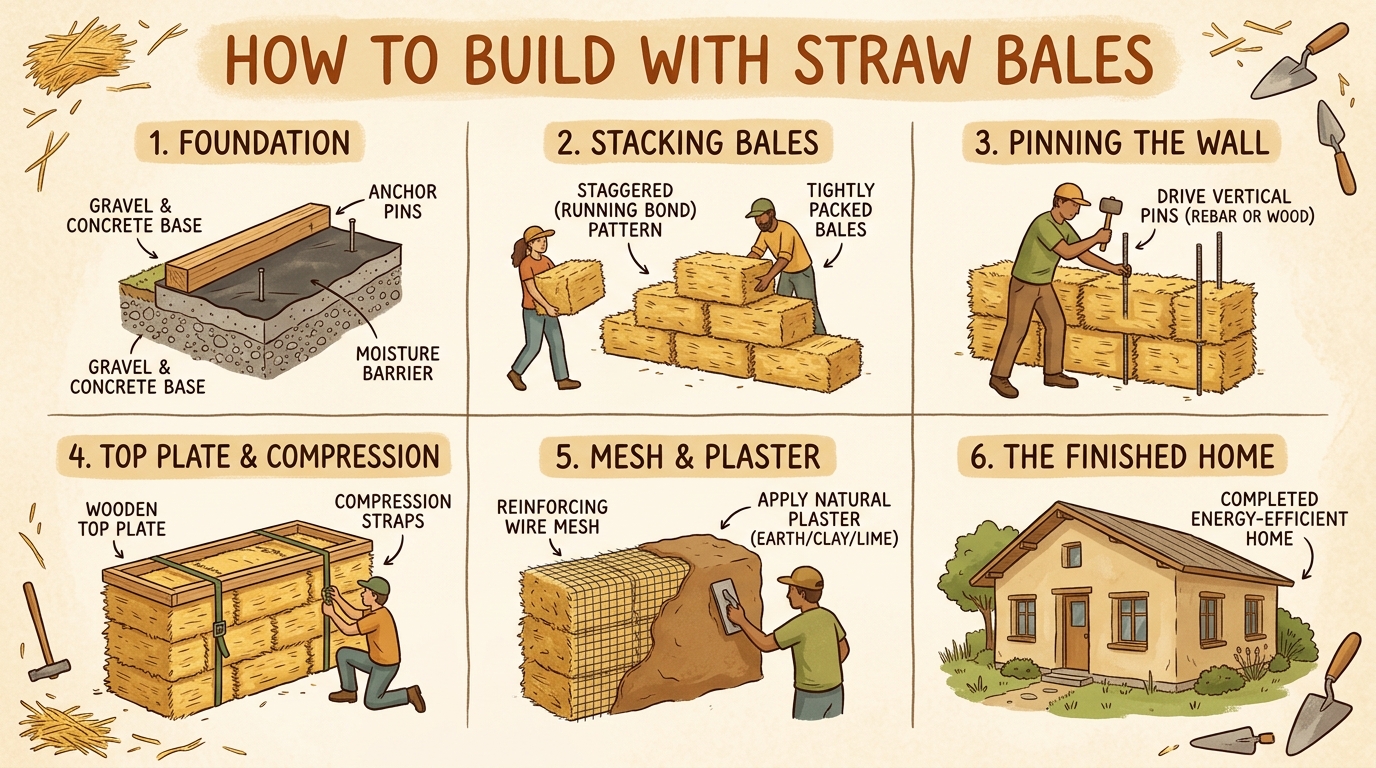
Foundation Preparation: Before starting construction with straw bales, ensure your foundation is strong and level. This is crucial for the structural integrity of the building. You may need to consult a professional to make sure the foundation can support the weight of the straw bales and the structure.
Stacking Straw Bales: Start stacking the straw bales on the foundation, making sure they are placed tightly together to prevent any gaps. Use twine or wire to secure the bales in place and create stability. It’s important to stack the bales in a way that provides good insulation and structural support for the walls.
Installing Support Systems: As you stack the straw bales, consider adding support systems such as wooden or metal stakes, rebar, or bamboo poles to reinforce the structure. These support systems can help distribute the weight of the roof and walls evenly and prevent any shifting or settling over time.

Tips for Ensuring Structural Integrity
Proper Foundation: One key tip for ensuring the structural integrity of a straw bale construction is to start with a solid foundation. The foundation should be able to support the weight of the structure and provide a level base for the bales. It is crucial to consult with a structural engineer to ensure the foundation meets all necessary requirements.
Moisture Management: Another important aspect to consider is moisture management. Moisture can be detrimental to straw bale structures, leading to mold growth and structural instability. It is essential to use moisture barriers, proper roof overhangs, and good site drainage to prevent water infiltration. Regularly inspecting the bales for signs of moisture and taking necessary precautions can help maintain the structural integrity of the building over time.
Finishing Touches and Decor Options
Finishing touches in a straw bale construction project can greatly enhance the overall aesthetic appeal of the building. One popular option is to plaster the walls both inside and out. This not only provides a smooth and finished look but also adds an extra layer of protection to the straw bales. Different types of plaster can be used, such as clay, lime, or cement-based, each offering unique benefits in terms of breathability, durability, and appearance.
Decor options for straw bale buildings are endless and can be tailored to suit individual preferences and styles. From natural finishes like earthen plasters and lime washes to more creative options like mosaic tiling or colorful murals, the choice is yours. Additionally, incorporating elements like reclaimed wood accents, recycled glass windows, or living green roofs can further enhance the sustainability and charm of the structure. Ultimately, the finishing touches and decor options in a straw bale construction project allow for personalization and creativity, making each building truly unique.
Maintenance and Long-Term Durability
Straw bale construction, when properly maintained, can offer excellent long-term durability. One key aspect of maintenance is ensuring that the bales are protected from moisture. Moisture is the primary enemy of straw bale buildings as it can lead to mold growth and structural degradation. Regular inspections of the exterior walls for any signs of water damage, such as leaks or discoloration, are essential. Additionally, maintaining a well-designed roof overhang can help prevent water infiltration into the walls.
Regular maintenance of the plaster or stucco finish is also crucial for the longevity of a straw bale structure. Cracks or damage to the exterior finish should be repaired promptly to prevent water from seeping into the bales. Furthermore, maintaining proper drainage around the foundation to prevent water from pooling near the walls is important for the overall durability of the building. By following a proactive maintenance routine and addressing any issues promptly, a straw bale structure can remain a sustainable and durable construction option for many years to come.