
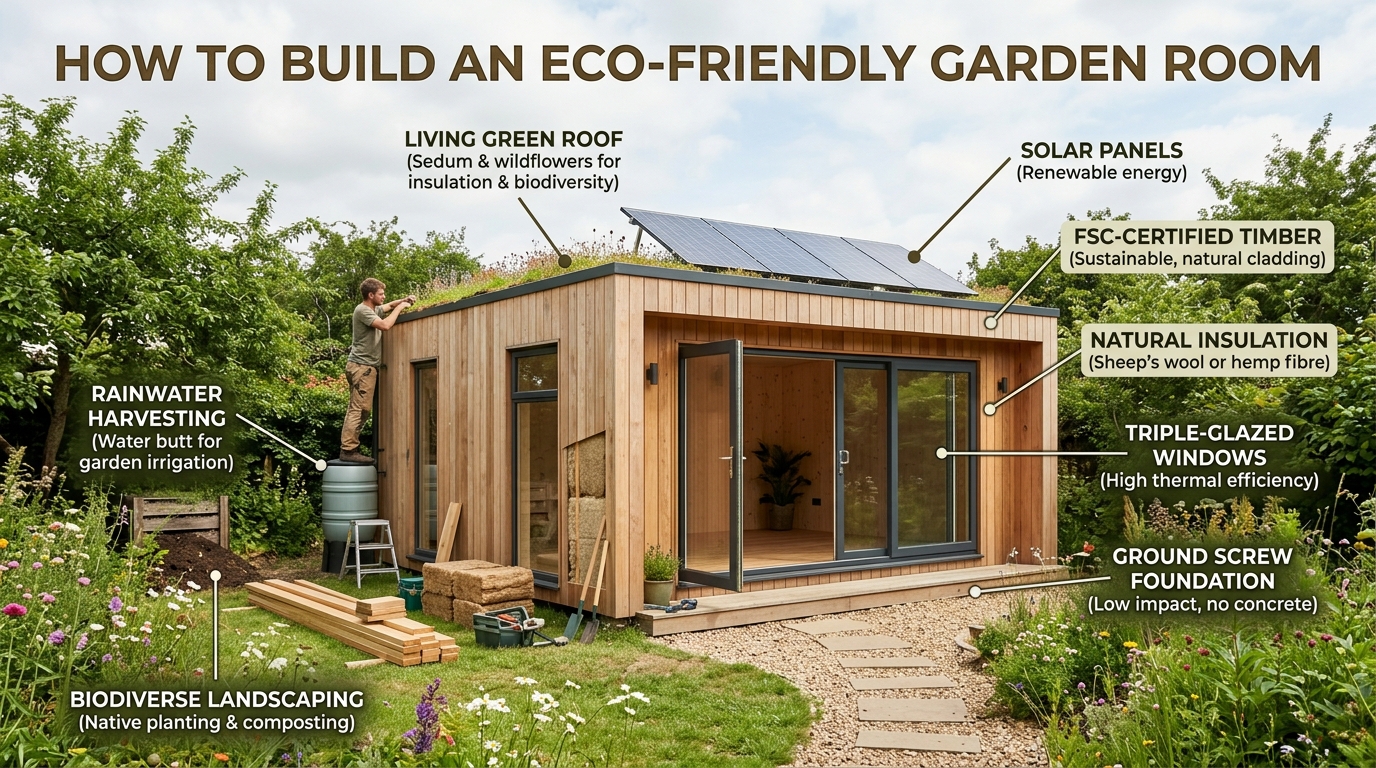
Imagine having your own tranquil oasis right in your backyard – a space where you can connect with nature, relax, and unwind. Building an eco-friendly garden room is not only a great way to enhance your outdoor living experience but also to contribute to a more sustainable environment. By utilizing green building materials, energy-efficient solutions, and incorporating nature-friendly design elements, you can create a space that not only benefits you but also the planet. From reclaimed wood and recycled materials to rainwater harvesting systems and green roofs, there are endless possibilities to make your garden room both beautiful and environmentally conscious. So, roll up your sleeves, grab your tools, and let’s embark on a journey to create a green sanctuary right in your own backyard.
Benefits of an Eco-Friendly Garden Room
An eco-friendly garden room offers a range of benefits that go beyond just being environmentally conscious. One significant advantage is the reduction of carbon footprint associated with traditional construction methods. By using sustainable materials and energy-efficient design principles, garden rooms can contribute to a healthier planet by minimizing the use of resources and lowering greenhouse gas emissions. Additionally, these eco-friendly structures provide a unique opportunity to create a space that promotes a closer connection with nature, offering a tranquil environment that enhances well-being.
Furthermore, eco-friendly garden rooms can lead to cost savings in the long run. With energy-efficient features and sustainable materials, these structures can help lower utility bills and maintenance costs over time. By investing in an eco-friendly garden room, homeowners can enjoy a comfortable and sustainable living space while also positively impacting the environment and their finances.
Choosing Sustainable Materials
Sustainable materials are essential when building an eco-friendly garden room. Opting for materials that are renewable, recyclable, or sourced locally can significantly reduce the environmental impact of your construction project. Look for materials that have been certified by reputable organizations for their sustainability practices, such as the Forest Stewardship Council (FSC) for wood products or the Cradle to Cradle certification for overall environmental responsibility.
Consider using materials like bamboo, reclaimed wood, recycled glass, or natural clay finishes that not only have a lower carbon footprint but also add a unique aesthetic to your garden room. By choosing sustainable materials, you are not only contributing to a healthier environment but also creating a space that is durable, efficient, and aesthetically pleasing for years to come.
Designing for Energy Efficiency
Energy efficiency is a crucial aspect to consider when designing an eco-friendly garden room. By incorporating energy-efficient design elements, you can reduce your energy consumption and environmental impact. One key strategy is to ensure proper insulation to minimize heat loss in the winter and heat gain in the summer. This can help maintain a comfortable temperature inside the garden room without relying heavily on heating or cooling systems.
Additionally, choosing energy-efficient windows and doors can help enhance the overall energy performance of the space. Look for products with high thermal resistance to prevent air leakage and improve insulation. By maximizing natural ventilation and incorporating shading elements, you can further reduce the need for artificial cooling during hot days. Overall, designing for energy efficiency not only lowers energy bills but also contributes to a more sustainable and eco-friendly garden room.

Incorporating Natural Lighting
Natural lighting plays a crucial role in the design of eco-friendly garden rooms. By maximizing the use of natural light, you can reduce the need for artificial lighting during the day, thus lowering energy consumption. To incorporate natural lighting effectively, consider positioning windows strategically to capture the most sunlight throughout the day. Additionally, using light-colored interior finishes can help reflect and distribute natural light more efficiently throughout the space.
Skylights and solar tubes are also excellent options to bring in natural light from above, especially in areas where traditional windows may not be feasible. These features not only enhance the aesthetic appeal of the garden room but also contribute to creating a bright and inviting space that feels connected to the outdoors. Overall, natural lighting not only benefits the environment by reducing energy usage but also creates a healthier and more comfortable living environment for occupants.
Water Conservation Strategies
Implementing water conservation strategies in your garden room design is essential for sustainable living. One effective way to conserve water is by installing a rainwater harvesting system. This system collects rainwater from the roof of your garden room and stores it for later use in watering plants or cleaning.
Additionally, incorporating drought-tolerant plants in your garden room landscaping can help reduce water consumption. These plants require less water to thrive, making them a great choice for a sustainable garden. Mulching around plants can also help retain moisture in the soil, reducing the need for frequent watering. By combining these strategies, you can create a water-efficient garden room that minimizes water waste and promotes environmental conservation.
Creating an eco-friendly garden room is not only beneficial for the environment but also for your own well-being. By incorporating sustainable materials, designing for energy efficiency, maximizing natural lighting, and implementing water conservation strategies, you can reduce your carbon footprint and contribute to a healthier planet. Additionally, an eco-friendly garden room can provide a peaceful and serene space for relaxation, work, or entertainment.
Remember that small changes can make a big impact, and every effort towards sustainability counts. Whether you are a seasoned environmentalist or just beginning to explore eco-friendly practices, building a garden room with sustainability in mind is a rewarding endeavor. Embrace the opportunity to create a space that not only enhances your lifestyle but also supports the conservation of our precious resources for future generations.