
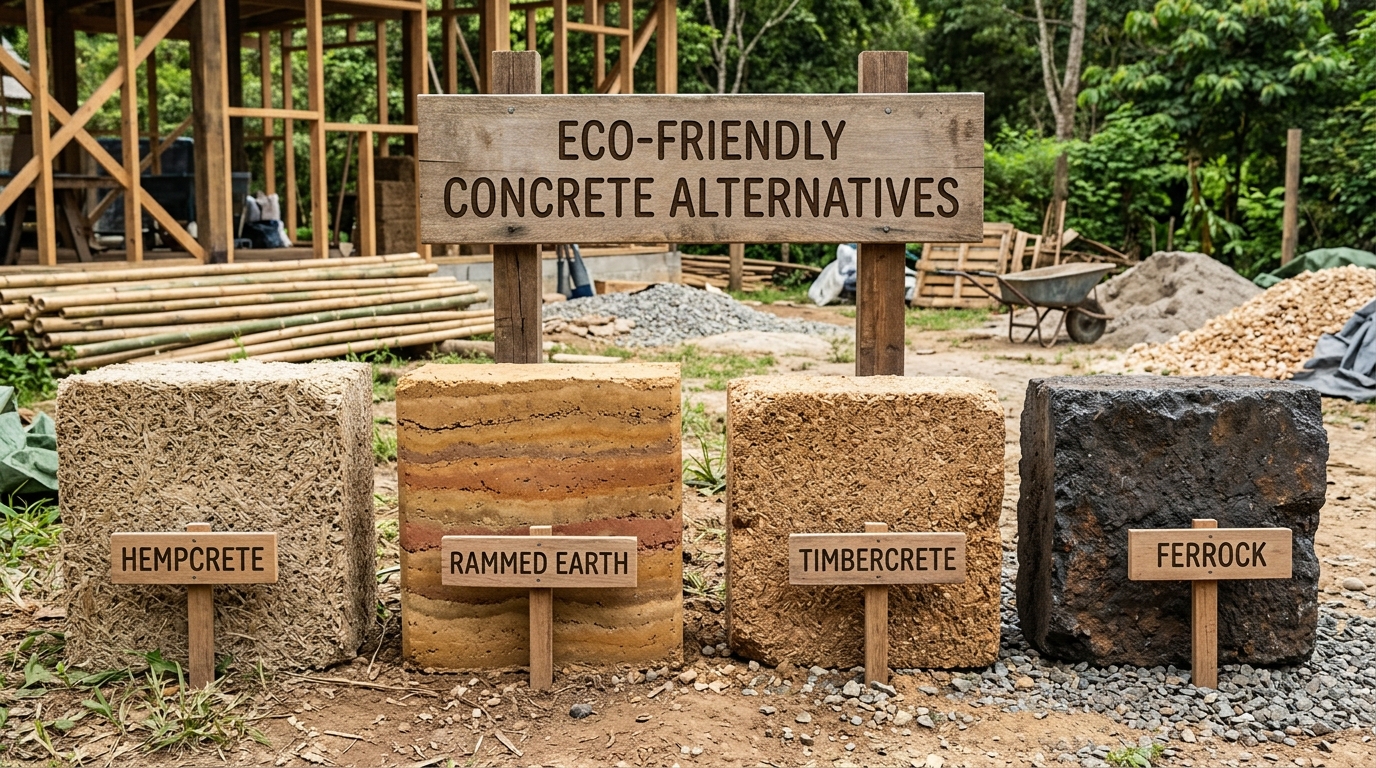
Are you looking to build or renovate with sustainability in mind? Say goodbye to traditional concrete and hello to eco-friendly alternatives that are better for the planet without compromising on strength and durability. From recycled materials like crushed glass and plastic to innovative mixes using fly ash and slag, there’s a world of possibilities when it comes to choosing environmentally conscious options for your construction projects. Let’s dive into the exciting realm of eco-friendly concrete alternatives that are paving the way for a greener future in the building industry.Hempcrete
Hempcrete is a sustainable building material made from the inner woody fibers of the hemp plant, lime, and water. It is lightweight, breathable, and has excellent thermal insulation properties. Hempcrete is a versatile material that can be used for walls, insulation, flooring, and roofing.
One of the main advantages of hempcrete is its carbon-negative footprint. As hemp absorbs carbon dioxide during its growth, hempcrete acts as a carbon sink, making it an environmentally friendly choice for construction projects. Additionally, hempcrete is non-toxic, pest-resistant, and has excellent moisture-regulating properties, creating a healthy living environment.
Ferrock
Ferrock is a sustainable alternative to traditional concrete that is gaining attention for its eco-friendly properties. This material is made from a mix of steel dust, which is a byproduct of the steel manufacturing industry, and recycled materials such as fly ash, silica fume, and water. One of the key features of Ferrock is its ability to absorb and trap carbon dioxide, making it a carbon-negative material. This means that Ferrock actually helps reduce greenhouse gas emissions by sequestering carbon rather than emitting it.
Furthermore, Ferrock is known for its durability and strength, making it suitable for a wide range of construction applications. It has been used in projects such as building foundations, retaining walls, and sculptures. With its unique composition and environmental benefits, Ferrock presents a promising solution for sustainable construction practices that aim to reduce the carbon footprint of the built environment.
Ashcrete
Ashcrete is a sustainable building material that incorporates fly ash, a waste product from coal combustion, into concrete mixtures. Fly ash is a fine powder that usually ends up in landfills, but by using it in concrete production, it reduces the need for traditional cement, which is a major source of carbon emissions. Ashcrete offers several benefits, such as improved workability, reduced permeability, and increased durability compared to conventional concrete.
Furthermore, Ashcrete helps to reduce greenhouse gas emissions and energy consumption associated with concrete production. By utilizing fly ash as a partial replacement for cement, Ashcrete contributes to the conservation of natural resources and minimizes the environmental impact of construction projects. This innovative material showcases the potential of repurposing industrial by-products to create more sustainable and eco-friendly building solutions.

Grasscrete
Grasscrete is a sustainable paving solution that combines the structural integrity of concrete with the aesthetic appeal of grass. It consists of a grid system that allows grass to grow within the voids, creating a permeable surface that reduces stormwater runoff and minimizes heat island effect in urban areas. Grasscrete is commonly used for parking lots, driveways, and erosion control applications due to its ecological benefits.
By incorporating vegetation, Grasscrete helps to improve air quality, reduce noise pollution, and enhance the overall visual appeal of outdoor spaces. Additionally, the grass coverage helps to mitigate the heat generated by traditional concrete surfaces, making it a popular choice for environmentally conscious projects seeking sustainable alternatives to traditional paving materials.
Bamboo Concrete
Bamboo concrete is a sustainable construction material that combines the strength of bamboo with the durability of concrete. Bamboo is a fast-growing, renewable resource that can be harvested without causing environmental harm. When combined with concrete, bamboo fibers add tensile strength and flexibility to the material, making it ideal for earthquake-prone areas.
Not only does bamboo concrete reduce the environmental impact of traditional concrete production, but it also offers excellent thermal insulation properties. This innovative material is gaining popularity in sustainable construction projects around the world due to its eco-friendly nature and superior performance compared to conventional concrete.
Section 7: Mycelium Bio-concrete
Mycelium bio-concrete is a sustainable building material that combines the strength of concrete with the eco-friendly properties of mycelium, the root structure of fungi. This innovative material is created by mixing mycelium with organic waste, such as agricultural byproducts, and allowing it to grow and bind together into a solid structure. Mycelium bio-concrete is lightweight, fire-resistant, and biodegradable, making it a promising alternative to traditional concrete.
One of the key benefits of mycelium bio-concrete is its ability to sequester carbon dioxide during the growth process, making it a carbon-negative material. Additionally, mycelium bio-concrete requires minimal energy and resources to produce, making it a highly sustainable option for construction projects. As the demand for environmentally friendly building materials continues to grow, mycelium bio-concrete is poised to play a significant role in the future of sustainable construction.