
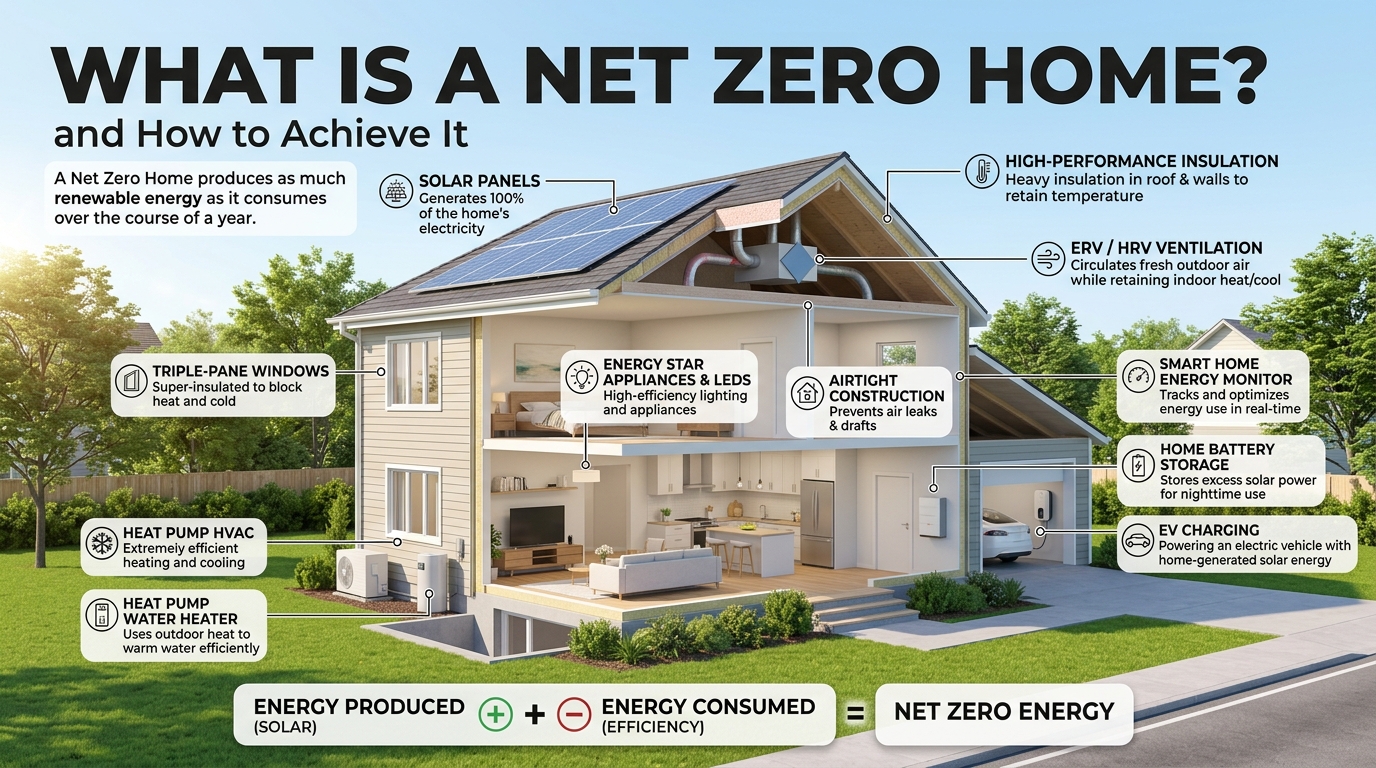
Imagine living in a home that not only provides comfort and security but also makes a positive impact on the environment. That’s the promise of a net zero home. A net zero home is a sustainable living space that produces as much energy as it consumes, resulting in a net zero carbon footprint. Achieving a net zero home involves a combination of energy-efficient design, renewable energy sources, and conscious lifestyle choices. By implementing these strategies, homeowners can significantly reduce their energy bills and contribute to a healthier planet. So, let’s explore what it takes to turn your home into a net zero oasis.
Benefits of Building a Net Zero Home
Lower Energy Bills: One of the primary benefits of building a net zero home is the significant reduction in energy bills. By generating as much energy as the home consumes, owners can eliminate or greatly reduce their monthly utility costs, leading to long-term savings.
Environmental Impact: Net zero homes have a much smaller carbon footprint compared to traditional homes. By utilizing renewable energy sources and energy-efficient design principles, these homes significantly reduce greenhouse gas emissions and help combat climate change.
Increased Comfort: Net zero homes are designed to be more comfortable and healthier for occupants. With superior insulation, high-performance windows, and efficient heating and cooling systems, these homes maintain a consistent temperature year-round, leading to a more comfortable living environment.
Design Principles for Achieving Net Zero
Passive Solar Design: One of the key design principles for achieving net zero energy consumption in a home is passive solar design. This involves strategically positioning windows, walls, and floors to maximize natural light and heat from the sun during the winter months, reducing the need for artificial heating. This design principle also includes features such as overhangs and shading devices to prevent overheating in the summer.
Optimal Insulation: Proper insulation is crucial for maintaining a consistent indoor temperature and reducing the need for heating and cooling systems. Designing a net zero home with high-performance insulation in walls, ceilings, and floors can significantly improve energy efficiency. Additionally, using materials with high thermal mass, such as concrete or brick, can help regulate indoor temperatures by storing and releasing heat gradually.
Energy-Efficient Building Materials
Energy-efficient building materials play a crucial role in the construction of net zero homes. These materials are designed to reduce energy consumption, increase insulation, and improve overall efficiency. One key aspect of energy-efficient building materials is their ability to minimize heat loss and gain, helping to maintain a consistent indoor temperature without relying heavily on heating or cooling systems.
Materials such as high-performance windows, advanced insulation, cool roofs, and thermal mass elements are commonly used in net zero construction. High-performance windows are designed to limit heat transfer, while advanced insulation materials help to create a well-insulated building envelope. Cool roofs reflect sunlight and reduce the amount of heat absorbed by the building, thus lowering cooling costs. Thermal mass elements, such as concrete or stone, can absorb and store heat, helping to stabilize indoor temperatures.

Renewable Energy Systems for Net Zero Homes
Renewable energy systems play a crucial role in achieving net zero energy consumption in homes. These systems harness energy from sources that are naturally replenished, such as the sun, wind, and water, to power the various functions of a household. One of the most common renewable energy systems used in net zero homes is solar photovoltaic (PV) panels. These panels convert sunlight into electricity, which can be used to power appliances, lighting, and heating systems within the home. Additionally, excess electricity generated by solar panels can be stored in batteries for later use or fed back into the grid, allowing homeowners to further reduce their reliance on traditional energy sources.
Other renewable energy systems that can be integrated into net zero homes include wind turbines, geothermal heat pumps, and micro-hydro systems. Each of these systems offers unique advantages and considerations based on factors such as location, climate, and available resources. By combining multiple renewable energy sources and optimizing their performance through smart design and technology, homeowners can effectively achieve net zero energy consumption and reduce their environmental impact.
Cost Considerations and Return on Investment
Cost considerations: Building a net zero home typically involves higher upfront costs compared to traditional homes. The initial investment is primarily due to the incorporation of energy-efficient materials, technologies, and renewable energy systems. However, over time, homeowners can expect significant savings on energy bills, maintenance costs, and potential tax incentives. It is essential to carefully evaluate the initial costs versus long-term savings to make an informed decision.
Return on investment: Despite the higher initial costs, net zero homes offer a substantial return on investment in the form of reduced energy expenses and increased property value. Homeowners can recoup their initial investment through lower energy bills over time, making net zero homes a financially sound choice. Additionally, the growing demand for sustainable homes in the real estate market can further enhance the resale value of net zero properties, providing a strong return on investment in the long run.
Steps to Achieve Net Zero in Your Home
Energy Audit: The first step in achieving a net-zero home is to conduct a thorough energy audit. This audit helps identify areas where energy is being wasted and provides valuable insights into where improvements can be made. By understanding your home’s current energy consumption patterns, you can develop a more targeted plan to reduce energy usage.
Improve Insulation and Air Sealing: Proper insulation and air sealing are critical components of a net-zero home. By ensuring that your home is well-insulated and airtight, you can minimize heat loss in the winter and heat gain in the summer. This helps maintain a consistent indoor temperature, reducing the need for heating and cooling systems.
Upgrade to Energy-Efficient Appliances: Another important step towards achieving a net-zero home is to upgrade to energy-efficient appliances. Appliances such as refrigerators, washing machines, and HVAC systems are available with high energy efficiency ratings, helping to lower overall energy consumption in your home.