
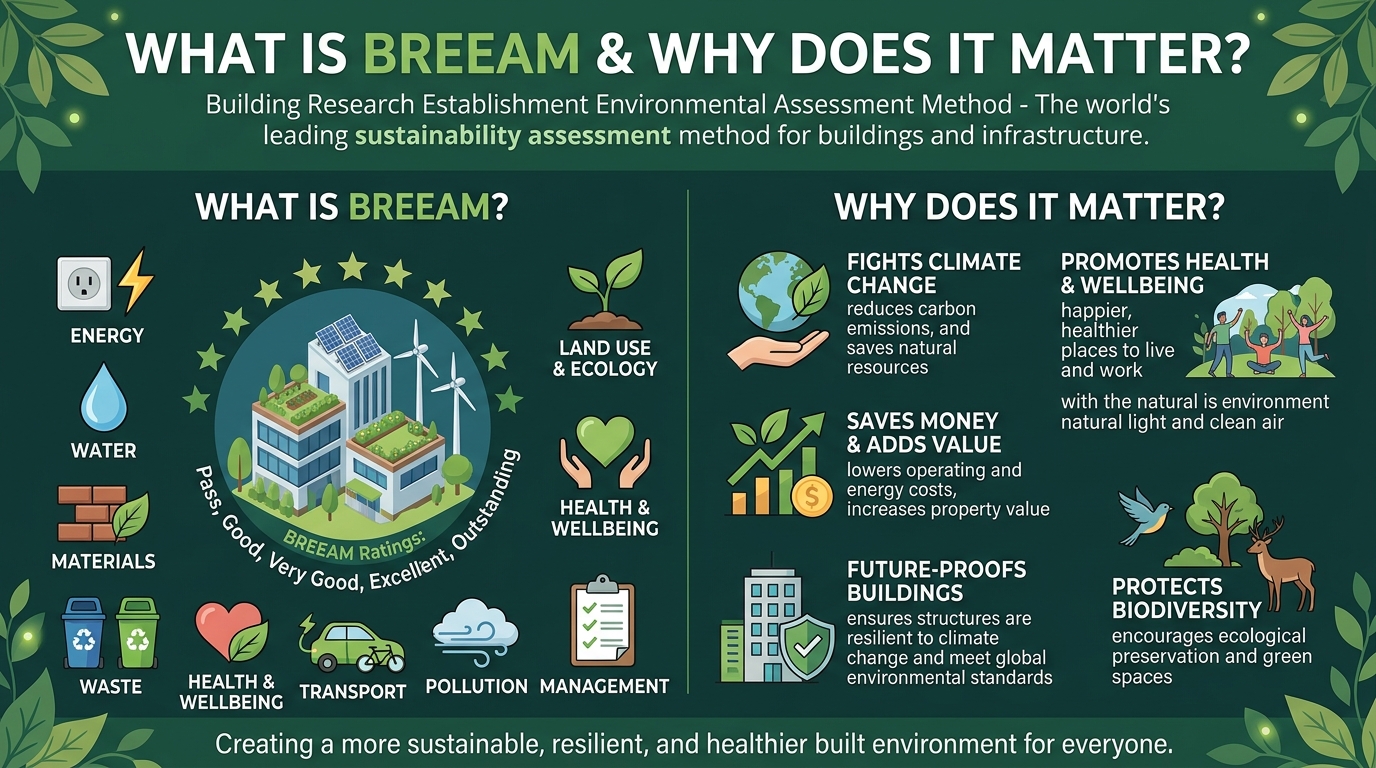
Have you ever wondered how sustainable a building truly is? Enter BREEAM – the Building Research Establishment Environmental Assessment Method. This internationally recognized certification system evaluates the environmental performance of buildings, providing a comprehensive assessment of their sustainability. BREEAM takes into account a wide range of criteria, from energy efficiency and water usage to materials selection and ecology, making it a crucial tool for ensuring that buildings are not only structurally sound, but also environmentally friendly. In a world where climate change is a pressing issue, understanding and implementing BREEAM standards is imperative for creating a more sustainable future.
Benefits of BREEAM Certification
BREEAM certification offers a wide array of benefits for building owners, occupants, and the environment. Firstly, it provides a recognized standard for assessing and improving the sustainability of buildings, ensuring they meet high environmental and performance standards. This certification can enhance the marketability of a building by demonstrating its commitment to sustainability, which can attract environmentally-conscious tenants or buyers.
Moreover, BREEAM-certified buildings often experience lower operational costs due to energy and water efficiency measures implemented during the certification process. Additionally, these buildings tend to have healthier indoor environments, promoting the well-being and productivity of occupants. From a broader perspective, BREEAM certification contributes to the global effort to combat climate change by reducing carbon emissions and resource consumption in the built environment.
How BREEAM Works
BREEAM (Building Research Establishment Environmental Assessment Method) is a robust and widely recognized sustainability assessment method for the built environment. It sets the standard for best practice in sustainable building design, construction, and operation. The BREEAM methodology evaluates a range of criteria across various sustainability categories to assess the overall environmental performance of a building.
Essentially, BREEAM works by awarding credits across categories such as energy efficiency, water usage, materials selection, and ecological impact. These credits are then tallied to determine a final score or rating for the building. The higher the score achieved, the higher the level of certification awarded, ranging from Pass, Good, Very Good, Excellent, and Outstanding. This rating system provides a clear benchmark for understanding and comparing the sustainability performance of buildings.
BREEAM Assessment Process
BREEAM assessment process involves several key steps to evaluate the sustainability performance of a building. The process typically begins with project registration and the appointment of an assessor. The next step involves gathering relevant information about the building design, construction, and operation. This data is then used to assess the building against a set of sustainability criteria, covering categories such as energy, water, materials, and ecology.
Assessors conduct on-site visits to verify the information provided and ensure compliance with BREEAM standards. They document their findings and submit a report for certification. Once the assessment is complete, the building is awarded a BREEAM rating based on its performance. This rating provides a clear indication of the building’s sustainability level and can help stakeholders make informed decisions about the environmental impact of the project.

Case Studies of BREEAM Projects
Case studies of BREEAM projects provide real-world examples of buildings that have achieved BREEAM certification and showcase the benefits of sustainable construction practices. These case studies highlight how BREEAM standards have been implemented in various projects across different sectors, such as residential, commercial, and industrial.
By examining these case studies, stakeholders can gain insights into the design strategies, technologies, and materials used to meet BREEAM requirements and achieve high sustainability ratings. Additionally, these examples can serve as inspiration for future projects looking to incorporate sustainable features and pursue BREEAM certification.
BREEAM vs Other Green Building Certifications
BREEAM (Building Research Establishment Environmental Assessment Method) is well-known for being one of the oldest and most widely used green building certification systems globally. When comparing BREEAM to other green building certifications such as LEED (Leadership in Energy and Environmental Design) or Green Star, each system has its unique strengths and focuses.
One key difference is that BREEAM is more prevalent in Europe, while LEED is more commonly used in the United States. BREEAM places a strong emphasis on a project’s environmental impact, health and wellbeing, innovation, and management processes. On the other hand, LEED focuses more on energy efficiency, water savings, and sustainable materials. Green Star, primarily used in Australia, concentrates on sustainable building practices specific to the region. Choosing between these certifications often depends on the project location, goals, and stakeholders’ preferences.
Future of BREEAM in Sustainable Construction
BREEAM has established itself as a leading green building certification system globally, with a strong focus on sustainability and environmental performance. As the construction industry continues to prioritize sustainable practices, the future of BREEAM looks promising. With an increasing emphasis on reducing carbon emissions, conserving resources, and promoting healthier indoor environments, BREEAM is well-positioned to remain a key player in sustainable construction.
Furthermore, as regulations and consumer demand for sustainable buildings continue to grow, BREEAM is expected to evolve to meet these changing needs. The certification system is likely to adapt to incorporate new technologies, materials, and design strategies that further enhance the environmental performance of buildings. Additionally, BREEAM’s ongoing commitment to research and development ensures that it remains at the forefront of sustainable construction practices, making it a valuable tool for developers, designers, and building owners looking to create more sustainable built environments.